

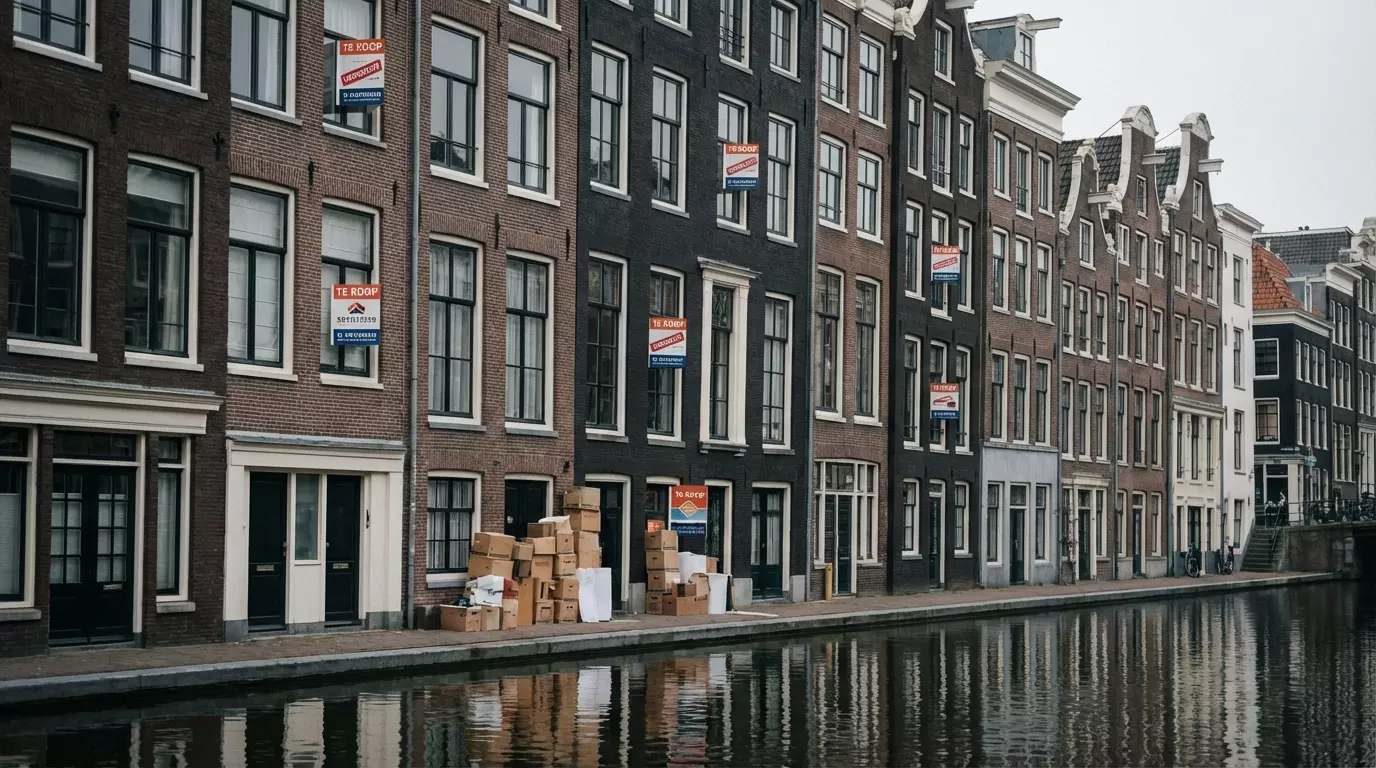
Rental Prices Soar as Landlords Leave Market
The Dutch rental market is experiencing a perfect storm of rising prices and shrinking availability as property owners increasingly decide to sell their investments. Recent data shows that rental prices have climbed significantly across the Netherlands, with some regions seeing increases of up to 15% in the past year alone. This trend is creating unprecedented challenges for those seeking affordable housing in an already strained market.
The combination of regulatory changes, increased taxation, and market uncertainty has prompted many landlords to exit the rental sector entirely. According to housing market analysts, this exodus is happening at a critical time when demand for rental properties remains at an all-time high. The situation has created a vicious cycle where fewer available properties drive prices even higher, making it increasingly difficult for middle-income families and young professionals to find suitable accommodation within their budgets.
Why Dutch Landlords Are Selling Up Now
The decision by landlords to sell their rental properties is driven by multiple factors that have converged to make property rental less attractive as an investment. New government regulations have introduced stricter rent controls and increased tenant protections, which, while beneficial for renters in theory, have reduced profit margins for property owners. Additionally, tax changes have made owning rental properties less financially advantageous, with higher levies on rental income and property values cutting into returns that landlords previously enjoyed.
Beyond regulatory pressures, the current property market conditions have created an opportune moment for landlords to cash out. Property values remain relatively high, allowing owners to sell at favorable prices while avoiding the complexities of being a landlord in an increasingly regulated environment. Many small-scale landlords, who often own just one or two rental properties, are particularly affected by these changes. They’re finding that the administrative burden, combined with reduced profitability, no longer justifies keeping their properties in the rental pool. This shift is fundamentally changing the landscape of the Dutch housing market and contributing to the rental crisis affecting many European nations.
The Impact on Renters Across the Netherlands
Renters are bearing the brunt of this market transformation, facing both higher costs and fewer options. The average rental price for a standard apartment has increased substantially, with major cities like Amsterdam, Rotterdam, and Utrecht experiencing the steepest rises. Middle-income earners are particularly squeezed, as they often earn too much to qualify for social housing but struggle to afford market-rate rentals that now consume an increasingly large portion of their monthly income.
The shortage of available rental properties has created intense competition for every listing that comes to market. It’s not uncommon for prospective tenants to face bidding wars, where they offer to pay above the asking rent just to secure a place to live. Young professionals, students, and families looking to relocate for work are finding themselves in impossible situations, sometimes forced to accept properties that don’t meet their needs or are located far from their workplaces. The stress on renters extends beyond financial concerns to affect their overall quality of life and career opportunities. Many are delaying major life decisions, such as starting families or changing jobs, because they cannot find suitable and affordable housing in their desired locations.
What This Means for Housing Availability
The reduction in rental properties is having a cascading effect on overall housing availability throughout the Netherlands. As landlords convert rental properties back to owner-occupied homes or sell them to first-time buyers, the rental stock is shrinking at an alarming rate. Industry experts estimate that thousands of rental units have been removed from the market over the past year, with projections suggesting this trend will continue unless significant policy interventions occur.
This shift is creating a fundamental imbalance in the housing ecosystem. While some properties are being purchased by individuals who will live in them, thereby increasing homeownership rates, this doesn’t solve the problem for those who need rental accommodation due to their life circumstances or financial situations. The shortage is particularly acute in urban areas where job opportunities are concentrated and where rental housing has traditionally been more common. Housing associations and municipal authorities are struggling to fill the gap left by private landlords, as building new social housing units takes years and requires substantial investment. The situation has prompted calls for government action to stabilize the rental market, including proposals for incentives to keep properties in the rental sector and measures to accelerate the construction of new affordable housing units across the country.
In Short
The Dutch rental market is facing a critical juncture as rising prices collide with a shrinking supply of available properties. Landlords are leaving the market in significant numbers, driven by regulatory changes, increased taxation, and reduced profitability. This exodus is creating severe challenges for renters who must navigate higher costs and fierce competition for limited housing options.
The situation demands urgent attention from policymakers who must balance protecting tenant rights with maintaining a healthy rental market. Without intervention, the crisis will likely deepen, affecting not just individual renters but the broader economy as well. Workers may be unable to relocate for jobs, businesses may struggle to attract talent, and social inequality could widen as housing becomes increasingly unaffordable for average earners.
Solutions will require a multi-faceted approach, including incentives for maintaining rental properties, accelerated construction of affordable housing, and possibly revisiting some of the regulations that have inadvertently contributed to landlords exiting the market. The goal should be creating a sustainable rental sector that provides both fair returns for property owners and affordable, quality housing for tenants. Until such measures are implemented, Dutch renters can expect continued pressure on their finances and limited options in their housing searches.
FAQ
Why are rental prices increasing so rapidly in the Netherlands?
Rental prices are rising due to a combination of factors including reduced supply as landlords sell their properties, high demand for rental housing, and increased costs for property owners that are being passed on to tenants. The imbalance between supply and demand is the primary driver of price increases.
What regulations are causing landlords to leave the market?
New regulations include stricter rent controls, enhanced tenant protections, and increased taxation on rental income and property values. While these measures aim to protect renters, they have reduced profitability for landlords, particularly small-scale property owners.
How much have rental prices increased?
Some regions have seen rental price increases of up to 15% over the past year, with major cities experiencing the steepest rises. The exact increase varies by location and property type.
Are there any government programs to help renters?
Social housing programs exist for lower-income residents, but waiting lists are often years long. Some municipalities offer rental subsidies, but these typically don’t cover the full gap between affordable and market-rate rents.
Will rental prices eventually stabilize?
Market stabilization will depend on policy interventions and increased housing construction. Without significant changes, experts predict prices will continue rising as long as supply remains constrained and demand stays high.
What can renters do to find affordable housing?
Renters should consider expanding their search areas beyond major cities, register for social housing waiting lists early, explore house-sharing options, and stay informed about their rights as tenants to avoid exploitation in a competitive market.



Join The Discussion