

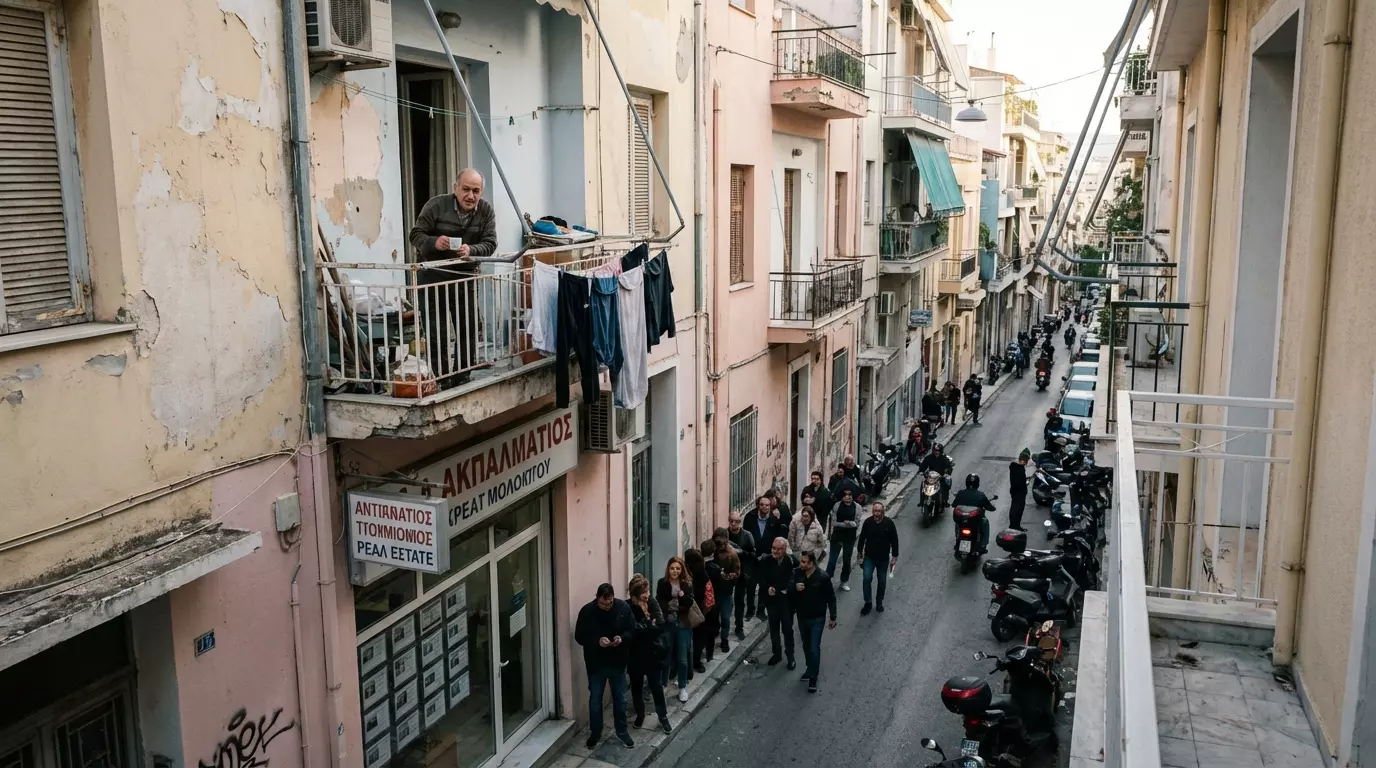
Greece’s Housing Crisis: A Growing Nightmare for Citizens
The Mediterranean nation of Greece is grappling with a severe housing crisis that has transformed from a simmering concern into a full-blown emergency, leaving countless citizens anxious and sleep-deprived. What was once a country where homeownership seemed attainable for the middle class has morphed into a landscape where securing affordable accommodation feels like an impossible dream. The crisis has reached such proportions that it dominates dinner table conversations, political debates, and social media discussions across the nation.
This housing emergency isn’t just about numbers on a spreadsheet or economic indicators. It represents real families being forced to make impossible choices, young adults postponing life milestones, and an entire generation questioning whether they’ll ever achieve the stability their parents took for granted. The situation has become so dire that housing insecurity now ranks among the top concerns keeping Greeks awake at night, competing with traditional worries about employment and economic stability.
Greece’s Housing Crisis Keeps Citizens Awake
The housing shortage in Greece has evolved into a national crisis that affects people across all demographics and income levels. Recent surveys and reports indicate that housing affordability has become one of the primary sources of stress for Greek households, with many families dedicating an unsustainable portion of their monthly income to rent or mortgage payments. The problem is particularly acute in major urban centers like Athens and Thessaloniki, where demand far outstrips supply, creating a perfect storm of scarcity and inflated prices.
What makes this crisis especially troubling is its timing. Greece has barely recovered from the devastating financial crisis that crippled its economy for nearly a decade. Just as citizens were beginning to regain their financial footing, they now face another economic challenge that threatens to undermine any progress made. The psychological toll of this ongoing uncertainty cannot be understated, as families find themselves trapped between stagnant wages and skyrocketing housing costs with seemingly no relief in sight.
Rising Rents Push Families to the Brink
Rental prices across Greece have experienced dramatic increases that have left many families struggling to maintain their current living situations. In Athens, the capital city, rental costs have surged by double-digit percentages over recent years, with some neighborhoods seeing increases of 50% or more compared to pre-pandemic levels. These astronomical jumps have forced families to make difficult decisions: cut back on essentials, relocate to less desirable areas, or face the very real possibility of homelessness.
The impact extends beyond mere financial strain. Families are being pushed out of neighborhoods where they’ve lived for generations, disrupting social networks and community ties that took years to establish. Parents are forced to move their children to different schools mid-year, elderly residents are separated from familiar surroundings and support systems, and the social fabric of entire communities is being torn apart. According to Eurostat, Greece now ranks among the European Union countries with the highest housing cost burden, with a significant percentage of households spending more than 40% of their disposable income on housing.
Young Greeks Struggle to Find Affordable Homes
The younger generation in Greece faces perhaps the most daunting housing challenges. Millennials and Gen Z Greeks are finding it nearly impossible to achieve the independence that previous generations took for granted. Many are forced to live with their parents well into their thirties, not by choice but by economic necessity. This extended dependence on family support has profound implications for everything from career development to family planning and mental health.
The situation has created a generation of “boomerang” adults who thought they had successfully launched their independent lives, only to be forced back home due to unaffordable housing costs. Young professionals earning decent salaries in fields like technology, education, and healthcare still find themselves priced out of the rental market in desirable locations. The dream of homeownership has become so distant that many young Greeks have simply given up on it entirely, accepting that they may rent for their entire lives. This shift represents a fundamental change in social expectations and life planning, with consequences that will ripple through Greek society for decades to come.
Government Faces Pressure to Act on Housing
The Greek government is under mounting pressure from citizens, advocacy groups, and opposition parties to implement meaningful solutions to the housing crisis. Public demonstrations and protests have become more frequent, with citizens demanding immediate action to address skyrocketing rents and the shortage of affordable housing options. The political stakes are high, as housing insecurity affects voters across the political spectrum, making it impossible for any party to ignore the issue.
Various policy proposals have been floated, including rent control measures, increased investment in social housing, tax incentives for developers who build affordable units, and stricter regulations on short-term rental platforms that have converted residential properties into tourist accommodations. However, implementing these solutions faces significant challenges. The government must balance the need for immediate relief with concerns about market distortions, property rights, and the potential impact on tourism revenue. Critics argue that while discussions and studies continue, thousands of Greek families are reaching their breaking point. The European Commission has also highlighted housing affordability as a key challenge facing several member states, including Greece, putting additional international pressure on the government to act decisively.
Key Factors Contributing to the Crisis
Several interconnected factors have created and perpetuated Greece’s housing emergency:
- Tourism Boom Impact: The explosion of short-term rental platforms has converted thousands of residential units into tourist accommodations, reducing available housing stock for permanent residents.
- Limited New Construction: Years of economic stagnation resulted in minimal new housing development, creating a supply shortage that persists today.
- Golden Visa Program: Investment schemes offering residency permits to foreign buyers have driven up property prices in desirable areas.
- Wage Stagnation: While housing costs have soared, salaries have remained relatively flat, creating an ever-widening affordability gap.
- Urban Migration: Young people continue moving to cities for education and employment opportunities, increasing demand in already tight markets.
Comparing Greece to Other European Nations
| Country | Rent Increase (5 years) | Housing Cost Burden | Youth Homeownership Rate |
|---|---|---|---|
| Greece | 45-50% | High | Very Low |
| Spain | 35-40% | Medium-High | Low |
| Germany | 25-30% | Medium | Medium |
| Portugal | 40-45% | High | Low |
| France | 20-25% | Medium | Medium-High |
This comparison illustrates that while Greece isn’t alone in facing housing challenges, the severity and rapid escalation of its crisis place it among the most affected European nations.
Potential Solutions and Their Challenges
Addressing the housing crisis requires a multi-faceted approach that tackles both supply and demand issues. Expanding social housing programs could provide immediate relief for the most vulnerable populations, but requires significant public investment at a time when government budgets remain constrained. Implementing rent control measures might offer short-term protection for current renters, though economists warn this could discourage new construction and reduce overall housing supply.
Regulating short-term rentals more strictly could return thousands of units to the long-term rental market, but risks angering a powerful tourism industry that contributes significantly to the Greek economy. Offering tax incentives for affordable housing development might encourage private sector participation, but past experience suggests developers often find ways to circumvent affordability requirements. The challenge lies in finding the right combination of policies that provide immediate relief while creating sustainable long-term solutions.
In Short
Greece’s housing crisis has emerged as one of the nation’s most pressing social and economic challenges, keeping citizens across all age groups and income levels awake with worry about their housing security. The dramatic rise in rental costs, particularly in urban centers, has pushed families to their financial limits and beyond, forcing impossible choices between housing and other basic needs. Young Greeks face the bleakest prospects, with homeownership becoming an increasingly distant dream and even rental accommodation often beyond reach.
The government faces intense pressure to implement effective solutions, but the complexity of the crisis makes quick fixes unlikely. Multiple factors including tourism industry impacts, limited new construction, foreign investment, and wage stagnation have combined to create a perfect storm of housing unaffordability. While various policy proposals offer potential paths forward, each comes with its own set of challenges and trade-offs. What remains clear is that without decisive action, the housing crisis will continue undermining Greece’s economic recovery and social stability, affecting not just current residents but future generations of Greeks.
The situation demands urgent attention and creative solutions that balance the needs of residents, property owners, and the broader economy. As Greece navigates this crisis, the world watches, knowing that the housing challenges faced in Athens and Thessaloniki mirror struggles in cities across Europe and beyond. The solutions Greece develops, or fails to develop, will offer valuable lessons for other nations grappling with similar housing emergencies.
FAQ
What is causing Greece’s housing crisis?
The crisis stems from multiple factors including the conversion of residential properties to short-term tourist rentals, limited new housing construction after the financial crisis, foreign investment driving up prices, stagnant wages, and increased urban migration by young people seeking opportunities.
How much have rents increased in Greece?
In major cities like Athens, rental prices have increased by 45-50% or more over the past five years, with some neighborhoods experiencing even steeper increases, far outpacing wage growth.
Are young people in Greece able to buy homes?
Homeownership has become extremely difficult for young Greeks, with many unable to even afford rental accommodation independently. Most young adults are forced to live with parents well into their thirties due to housing costs.
What is the Greek government doing about the housing crisis?
The government is facing pressure to act but has yet to implement comprehensive solutions. Proposed measures include rent controls, increased social housing investment, stricter short-term rental regulations, and development incentives, though implementation remains limited.
How does Greece’s housing crisis compare to other European countries?
Greece ranks among the worst-affected EU nations, with housing cost burdens among the highest in Europe and rent increases exceeding most comparable countries over recent years.
What percentage of income do Greeks spend on housing?
Many Greek households now spend more than 40% of their disposable income on housing costs, well above the recommended 30% threshold for housing affordability.
housing crisis, rental prices, affordable housing
5 Suggested Internal Links:
housing affordability, short-term rental platforms, social housing programs, rent control measures, homeownership rates


Join The Discussion