

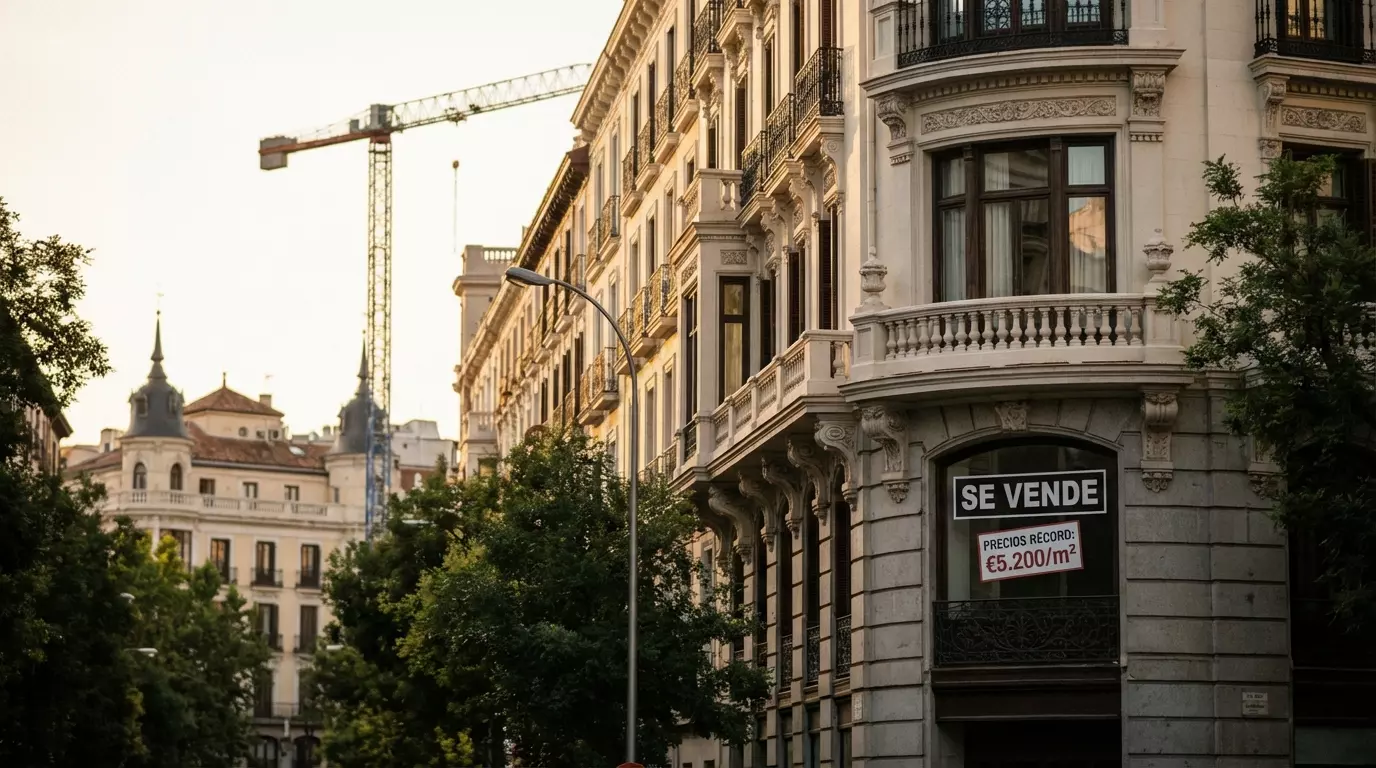
Madrid Real Estate Hits Record High Prices
The Spanish housing market has reached unprecedented levels, with Madrid leading the charge as property prices soar beyond the €5.000 per square meter threshold. This milestone marks a significant shift in the capital’s real estate landscape, creating both opportunities and challenges for stakeholders across the market. The surge represents one of the most dramatic price increases seen in recent years, fundamentally altering the accessibility of homeownership in one of Europe’s most vibrant cities.
Recent data reveals that Madrid’s property market has crossed a psychological and financial barrier that many analysts predicted would take years to reach. The average price per square meter in the capital now exceeds €5,000, placing Madrid among the most expensive cities in Spain for real estate purchases. This development has sparked intense debate among economists, urban planners, and housing advocates about the sustainability of such rapid growth and its implications for the city’s social fabric.
What’s Driving the 18.8% Annual Price Surge?
The remarkable 18.8% increase in housing prices over a 12-month period stems from a complex combination of economic factors and market dynamics. Strong demand from both domestic and international buyers has created intense competition for available properties, particularly in desirable neighborhoods. Foreign investment, especially from Latin American and European buyers, continues to pour into the Spanish market, attracted by the country’s lifestyle, climate, and relatively stable political environment compared to other regions.
Supply constraints have played an equally critical role in pushing prices upward. Construction of new residential units has not kept pace with population growth and urbanization trends, creating a significant shortage of available housing stock. Additionally, low interest rates during much of the measurement period encouraged borrowing and property investment, while inflation concerns have driven many investors to view real estate as a safe haven asset. The post-pandemic shift in housing preferences, with buyers seeking larger spaces and better amenities, has further intensified competition for premium properties.
How the Capital Compares to Other Spanish Cities
While Madrid’s price surge has captured headlines, the capital is not alone in experiencing significant real estate appreciation. Barcelona, Spain’s second-largest city, has also seen substantial increases, though it remains slightly below Madrid’s price levels in many comparable neighborhoods. The Catalan capital continues to attract international buyers and investors, driven by its Mediterranean location and strong tourism sector.
Other major Spanish cities present a more varied picture. Valencia and Seville have experienced moderate price growth, offering more affordable alternatives for buyers priced out of Madrid and Barcelona. Coastal areas, particularly along the Costa del Sol and Costa Blanca, have seen robust demand from foreign retirees and vacation home buyers. However, none of these markets have matched the intensity of Madrid’s price acceleration. Here’s how major Spanish cities compare:
Average Price per Square Meter (2024):
- Madrid: €5.000+
- Barcelona: €4.600-€4.800
- Valencia: €2.200-€2.500
- Seville: €2.000-€2.300
- Málaga: €3.000-€3.400
What This Means for Buyers and Renters in 2024
First-time homebuyers face increasingly daunting challenges in accessing Madrid’s property market. The combination of high prices and stricter lending requirements has effectively priced many young professionals and families out of ownership opportunities in the capital. Those who do manage to purchase often must compromise on location, size, or condition, settling for properties in peripheral neighborhoods or accepting longer commutes. The dream of homeownership in central Madrid has become increasingly unrealistic for average wage earners, forcing many to reconsider their long-term housing strategies.
Renters are experiencing parallel pressures as property owners pass increased costs onto tenants. Monthly rental rates have climbed steadily, consuming a larger percentage of household income for many Madrid residents. The situation has sparked calls for government intervention, including rent control measures and increased social housing construction. Some experts predict that without policy changes, Madrid risks losing the diverse population mix that has historically contributed to its cultural vitality and economic dynamism. Young professionals, artists, and service workers may increasingly seek opportunities in more affordable Spanish cities or abroad.
Investment Opportunities and Risks
Despite the high entry costs, many investors view Madrid’s real estate market as offering strong long-term potential. The city’s position as Spain’s political and economic center, combined with its growing tech sector and international business presence, suggests continued demand for housing. Rental yields, while compressed by high purchase prices, remain attractive compared to other investment vehicles in the current low-interest environment. Investors are particularly focused on properties near universities, business districts, and transportation hubs.
However, significant risks accompany these opportunities. The rapid price appreciation raises concerns about bubble formation and potential market corrections. Economic uncertainties, including inflation pressures and potential interest rate increases, could dampen buyer enthusiasm and reduce property values. Regulatory changes, such as stricter rental laws or increased property taxes, represent additional risk factors. Savvy investors are conducting thorough due diligence and maintaining realistic expectations about future returns, recognizing that past performance may not predict future results.
Government Response and Policy Considerations
Spanish authorities at both national and regional levels are grappling with how to address housing affordability concerns. Various proposals under consideration include:
- Expanding social housing construction programs
- Implementing tax incentives for affordable housing development
- Restricting short-term vacation rentals in residential areas
- Introducing rent stabilization measures in high-pressure markets
- Offering subsidies and guarantees for first-time buyers
The effectiveness of these interventions remains hotly debated. Critics argue that supply-side solutions, particularly streamlined construction permitting and increased housing density, offer the most sustainable path to affordability. Others emphasize the need for demand-side controls to prevent speculation and ensure housing serves residential rather than purely investment purposes. The political sensitivity of housing issues means that comprehensive reform faces significant obstacles, with various interest groups advocating for competing priorities.
Frequently Asked Questions
Why are Madrid property prices increasing so rapidly?
The 18.8% annual increase results from strong demand exceeding limited supply, foreign investment, low interest rates encouraging borrowing, and Madrid’s growing appeal as a European business and lifestyle destination.
Is now a good time to buy property in Madrid?
This depends on individual circumstances. While prices are high, continued demand suggests potential for further appreciation. However, buyers should carefully assess their financial situation and consider the risks of a potential market correction.
How does Madrid’s housing market compare to other European capitals?
Madrid remains more affordable than London, Paris, or Amsterdam but has become comparable to cities like Berlin or Rome. The rapid price growth is narrowing the gap with more expensive European markets.
What alternatives exist for those priced out of Madrid?
Buyers might consider emerging neighborhoods in Madrid’s periphery, nearby cities with good transportation connections, or other Spanish cities like Valencia or Seville that offer lower prices and good quality of life.
Will rental prices continue to increase?
Most analysts expect continued rental growth, though the pace may moderate if new supply enters the market or economic conditions change. Government regulations could also impact rental price trajectories.
In Short
Madrid’s housing market has reached a historic milestone with average prices exceeding €5.000 per square meter, driven by an 18.8% annual increase that reflects broader trends affecting Spanish real estate. The surge stems from multiple factors including strong demand, limited supply, foreign investment, and favorable financing conditions that have converged to create intense market pressure. While Madrid leads this trend, other major Spanish cities are experiencing similar, though less dramatic, price appreciation.
The implications for buyers and renters are profound, with affordability challenges reshaping who can access housing in the capital and how residents plan their financial futures. First-time buyers face particularly steep barriers, while renters contend with rising costs that consume increasing portions of household budgets. Investors see opportunities but must navigate risks including potential market corrections and regulatory changes.
Looking ahead, the sustainability of current price levels remains uncertain. Government responses, economic conditions, and supply-side developments will all influence whether Madrid’s market continues its upward trajectory or experiences a cooling period. For now, the €5.000 per square meter threshold represents not just a numerical milestone but a fundamental shift in Madrid’s housing landscape, with lasting consequences for the city’s social and economic character.

Join The Discussion